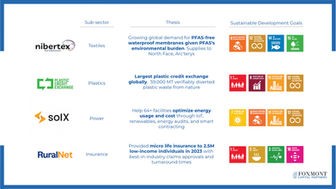
When people think about innovation today, they often picture the next artificial intelligence breakthrough, a disruptive SaaS platform, or a highly technical startup changing the way industries operate.
This perception is understandable. In mature startup ecosystems, many of the world’s largest venture-backed outcomes have come from technology-driven companies that transformed entire industries through software, AI automation, digital platforms, and the like.
However, does the same investment lens apply in emerging markets like the Philippines?
Emerging markets often operate under a different set of conditions. While technology continues to unlock new possibilities, many fundamental challenges remain unresolved, such as access to healthcare and financial services to infrastructure limitations and inefficient supply chains.
Why Solving Basic Problems Can Be More Urgent Than Building Cutting-Edge Solutions
Innovation is often associated with creating something entirely new.
But in emerging markets, some of the biggest opportunities come from improving access to things people already need. For instance, although a digital-powered healthcare solution may improve diagnosis, expanding access to basic healthcare services can create immediate impact for millions.
Or a sophisticated financial technology platform may optimize transactions, but helping more small businesses access capital and participate in the formal economy may address a more fundamental barrier.
Truly technology is a powerful accelerator, but its impact depends on whether the underlying infrastructure, systems, and consumers are ready.
In many cases, the most transformative companies are those that build the foundations that allow future innovation to happen.
Operationally Intensive Businesses Are Not Unscalable
One misconception in venture investing is that operationally heavy or brick-and-mortar businesses cannot achieve venture-scale growth.
However, scalability is not defined only by deep technology.
Businesses can scale through strong operational models, technology-enabled efficiencies, trusted brands, and expanding distribution networks.
A company does not need to be a pure technology platform to become a high-growth business.
With this, the key question lies in whether this business solves a large problem and scales efficiently.
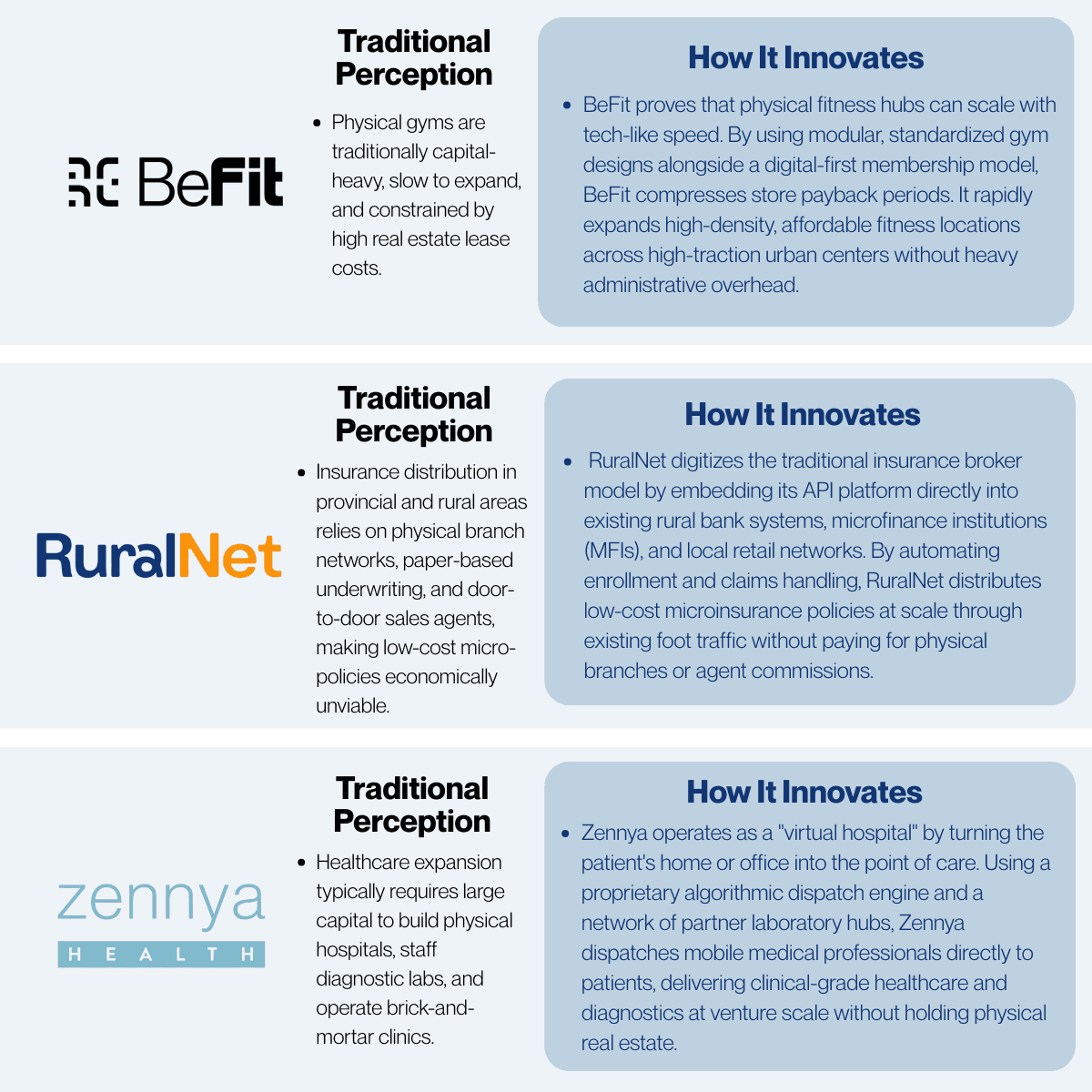
In practice, this principle is reflected across several of Foxmont’s portfolio companies. Even in sectors that may be considered traditional or operationally intensive, scalability can be achieved by combining efficient processes, strong brand recognition, and technology-enabled enhancements:
How Foxmont Evaluates Opportunities
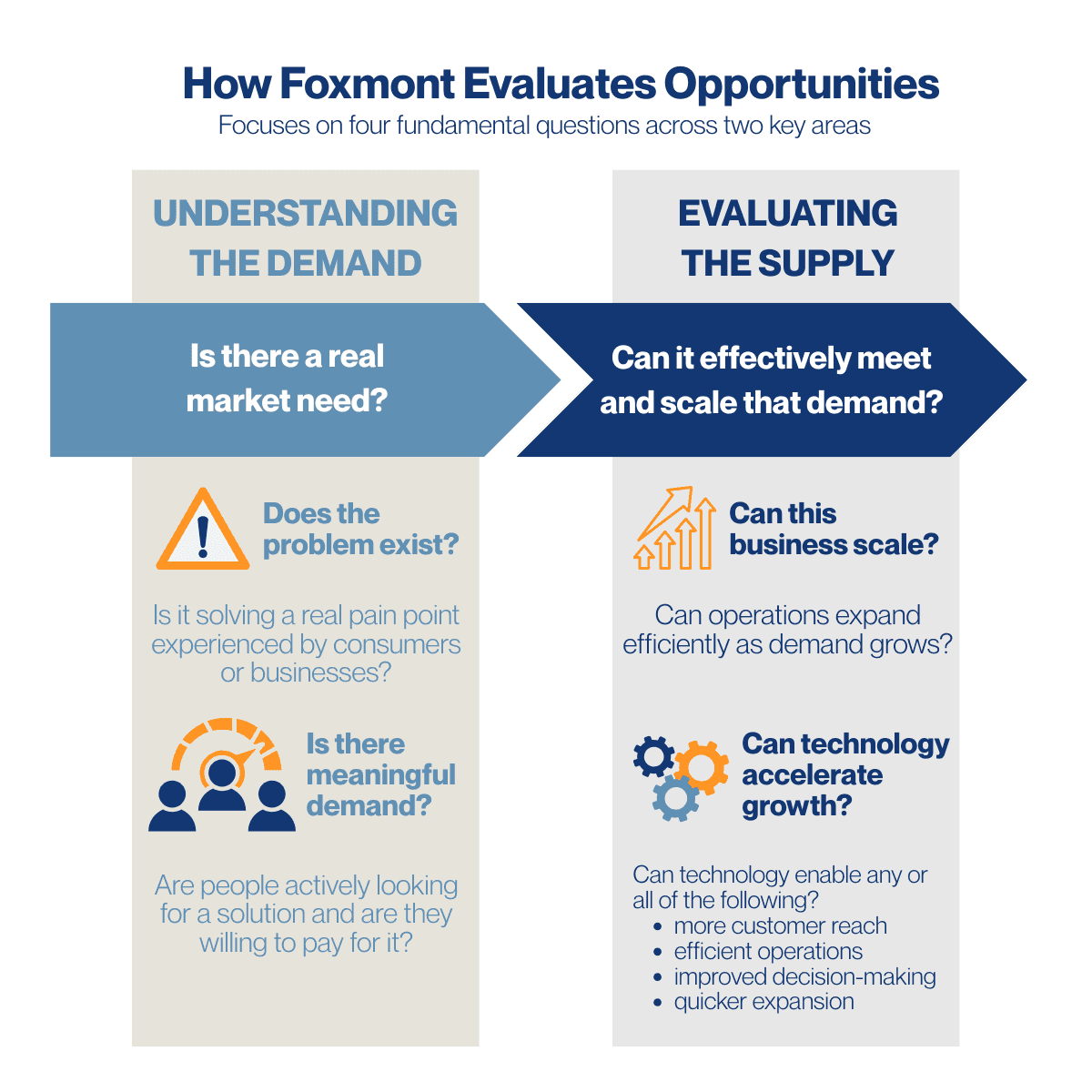
This perspective shapes how Foxmont approaches investing in emerging markets.
Rather than asking: Is this the most technologically advanced company? or Is this following the latest trend? Foxmont’s evaluation of investments looks more like this:
Building the Ecosystem Beyond Technology
Investing in foundational businesses does not mean moving away from technology.
Technology will always continue to be one of the most important drivers of innovation and economic growth. However, a stronger ecosystem requires both:
companies creating new technologies
companies using technology to solve existing problems
This concept has been proven true as some of the world’s most valuable companies achieved venture-scale success by pairing ground-level physical execution with technology as the accelerator:
Amazon: Started as an offline, garage-based bookstore packing and shipping paper books. It scaled into a global titan by using software to automate warehouse operations, optimize shipping routes, and manage inventory at a massive physical scale.
Pop Mart: Started as a single, traditional retail shop selling lifestyle trinkets. It transformed into a multi-billion-dollar global IP engine by deploying automated "Roboshops" (smart vending machines) to test location demand with zero store overhead, paired with a digitized online app experience and real-time sales analytics.
DALI Everyday Grocery: Operates plain-sight physical neighborhood discount stores across the Philippines, but achieves rapid, venture-scale rollout by using data-driven site selection, centralized distribution hubs, and automated inventory management behind the scenes.
The future of emerging markets will not be built by one type of company alone but will require innovators that address the problems of tomorrow along with innovators solving the challenges people face today.
Where Innovation Begins
Sometimes the most disruptive investment isn't inventing something new.
It's delivering something millions of people already need, but haven't been able to access.
We believe that as investors in an emerging market, solving foundational problems is not a step away from innovation but often where innovation begins.
3cat
From Corporate to Startup: Why More Mid-Career Operators Are Making the Leap