Stephanie had done everything “right.”
She built her career at established, high-performing companies like McKinsey & Company, Shopee, and L'Oreal, with clear career progression, strong compensation, and well-defined roles. On paper, the path ahead was obvious.
But at some point, a different question started to creep in: “Is this the kind of work I want to keep doing?”
It wasn’t about burnout. It wasn’t even about compensation.
It was about something harder to articulate: ownership, pace, and impact.
Today, Stephanie is COO at Niv Della, which houses the brands Colourette and Fresh Formula. And her transition reflects a broader shift we’re seeing among mid-career operators: a move not away from corporate, but toward a different way of working.
Compensation Matters, But So Does Ownership
One of the biggest misconceptions about moving to a startup is that it always requires a significant financial trade-off.
The reality is more nuanced. Compensation can vary widely depending on the stage, role, and company. Some startups are able to offer competitive packages, while others may not fully match corporate benchmarks.
While compensation absolutely matters, and is often a key consideration, it’s rarely the only factor shaping the decision. What begins to differentiate the experience is something more fundamental: ownership over how work gets done, and what it ultimately leads to.
So when Foxmont first reached out to Stephanie, flexibility was initially the interesting benefit. As a mother with young kids, remote work wasn’t a perk, it was a requirement. But what made her very excited was:
The ability to own outcomes, not just contribute to them
The autonomy to execute without layers of approvals
The visibility to see how her work directly impacts the business
As she puts it:
“What I enjoy is the complete ownership and blue sky thinking. Just being able to be the captain of our fate.”
In that sense, startups feel like a shift in how work is experienced: from contributing within a system, to owning outcomes more directly.
The Risk Isn’t What You Think
Startups operate with fewer layers but greater intensity, where fast iteration, open challenge, and end-to-end ownership replace hierarchy, and as Stephanie puts it,
“Working in a startup means that there’s this fulfillment of not having to manage optics but of driving output, and driving results.”
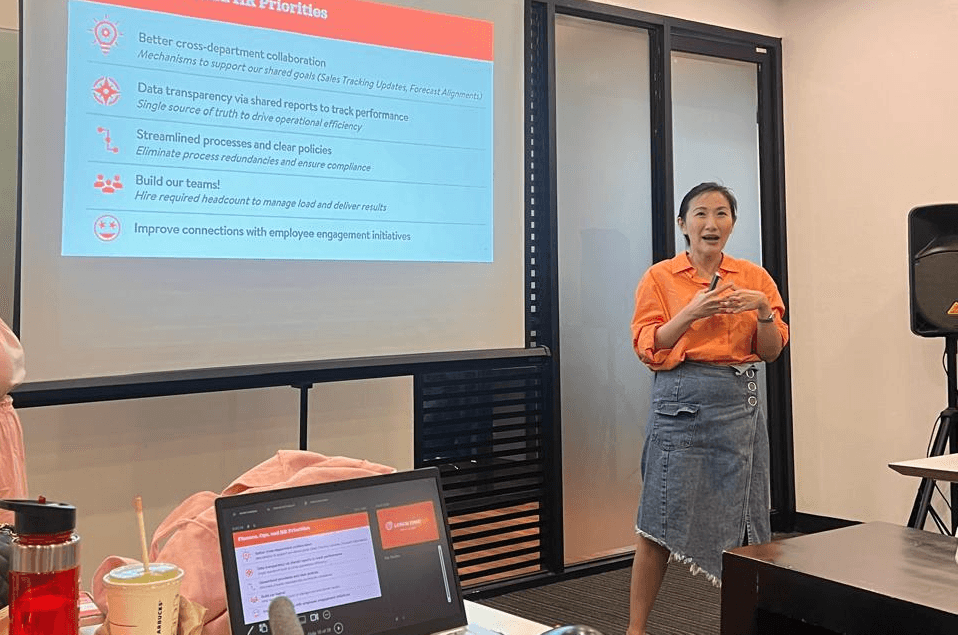
From the outside, moving into a startup can look like a high-risk decision which means less structure, less predictability, more uncertainty. All of that is true.
But the trade-off isn’t simply “stability vs risk.” What you’re really stepping into is career velocity. Moreover, the fear of failure is often overstated, or at least misunderstood.
Stephanie often gets asked by interviewees:
"What if the startup goes out of business?"
After years of experience at Colourette she can now answer that
"It will only go out of business if a series of bad decisions by all of us are made."
This perspective reframes risk as something more within your sphere of influence, rather than purely external.
That said, the transition isn’t without challenges.
Many operators underestimate:
How ambiguous decision-making can feel without established playbooks or managers to defer decisions to
The emotional weight of owning outcomes more directly
The need to operate without clearly defined boundaries or roles
The shift works best for those who are energized, not drained, by that kind of environment.
The Founder Matters More Than the Company

One of the most overlooked factors in making a successful transition is who you’re working with. In a corporate setting, systems carry a lot of the load while in a startup, people do.
For experienced hires, the founder’s leadership style becomes a critical variable. The key question is simple: Are they ready to truly share ownership?
In practice, this kind of alignment doesn’t happen by accident, it’s built over time.
For Stephanie, the decision to join wasn’t immediate. It involved multiple conversations, not just with the founder, but with the company's investors, and others in the industry, to get a clearer sense of where the company was and where it was headed.
More importantly, she spent time with Nina in working sessions that went beyond the typical interview process. These weren’t just conversations about the role, but about how they would actually work together, what decisions would look like, how ownership would be shared, and where she could contribute meaningfully.
By the time she made the decision, the move wasn’t based on a single moment, but on a clearer understanding of fit, trust, and how the partnership would work in practice.
In Stephanie’s case, that alignment was clear. There was a willingness to:
Delegate meaningfully
Encourage independent thinking
Welcome constructive challenge
Who Thrives in This Environment?
Not everyone should make the move, and that’s part of the point.
The operators who tend to thrive in startups are those who:
Take initiative without waiting for direction
Are comfortable operating in ambiguity
Enjoy building and scaling, not just optimizing
Are willing to challenge, and be challenged
For them, the lack of structure isn’t a drawback. It’s the opportunity.
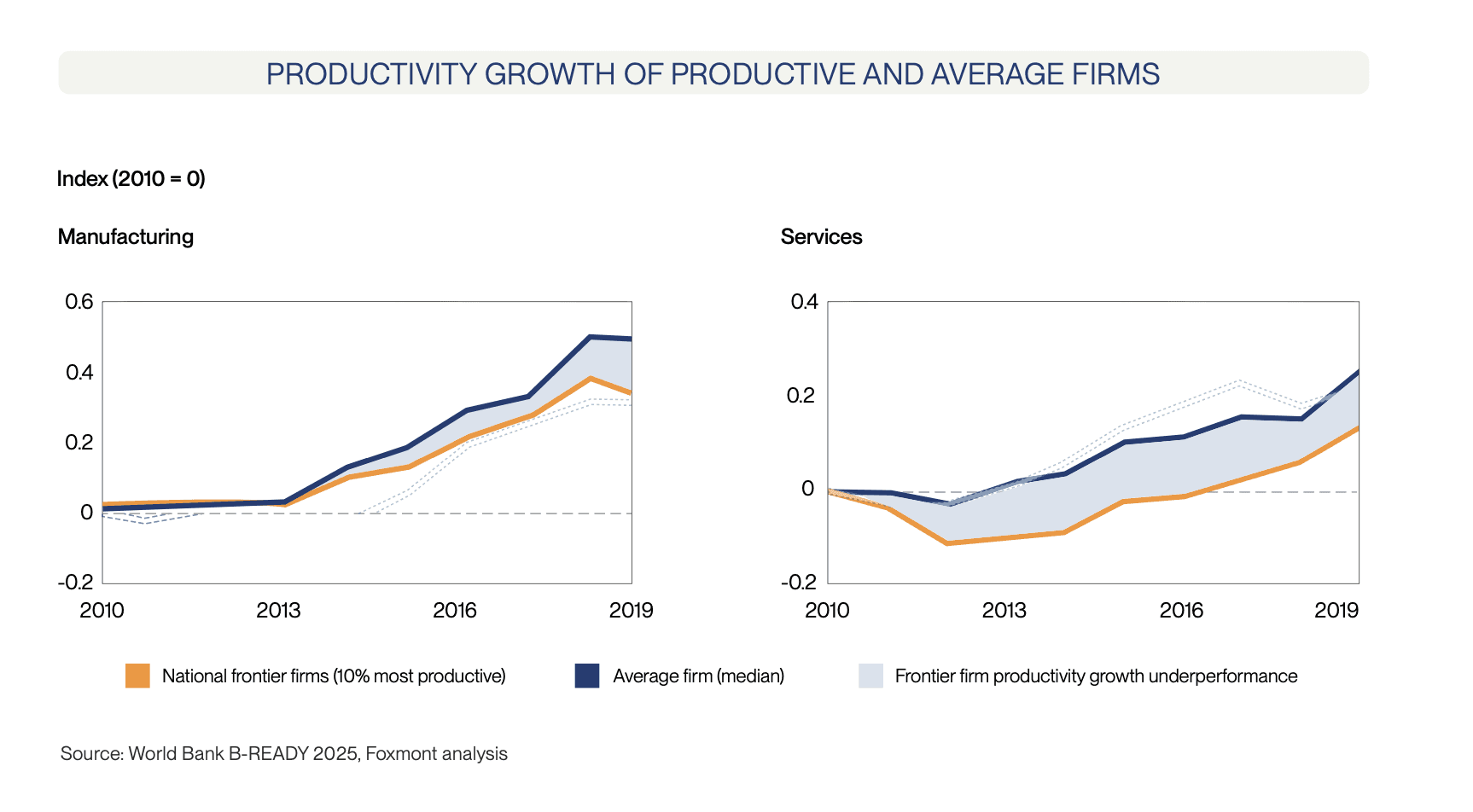
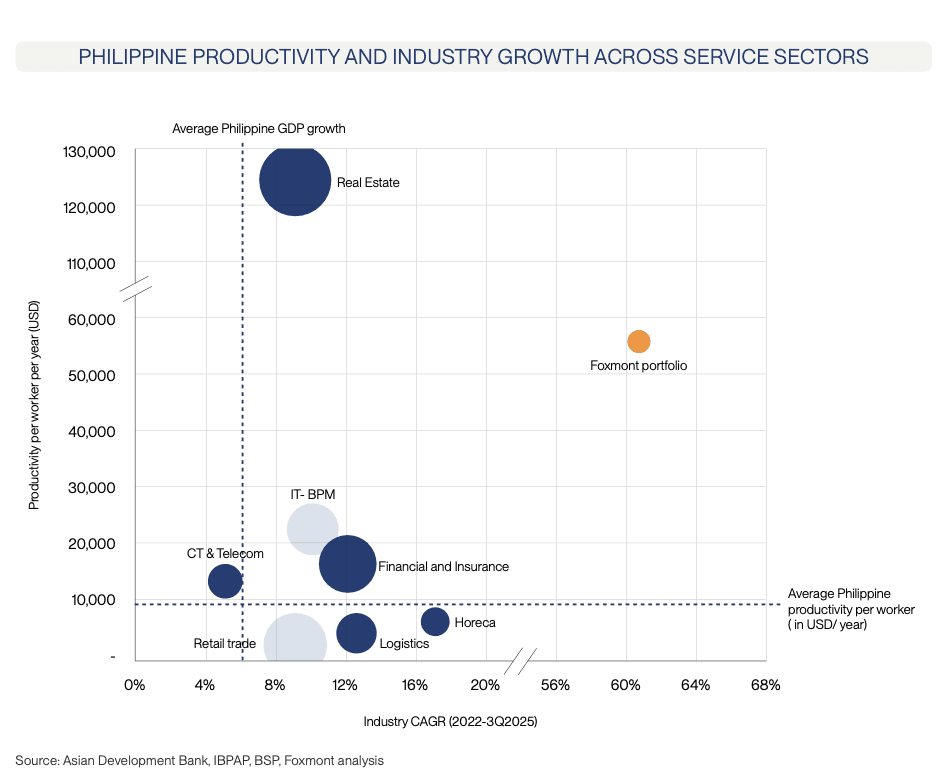
At a macro level, a similar story is emerging. The 2026 Philippine Private Capital Report highlights that the country’s frontier firms are seeing slower productivity growth relative to the rest of the market while in contrast, startups, including those within Foxmont’s portfolio, are increasingly outperforming on both productivity and innovation.
For those who find themselves wanting more ownership, more velocity, and a closer connection between effort and outcome, the question may not be if they should explore this path. It’s when.
If you’re thinking about making a similar move, or are interested in exploring opportunities in startups, you can join our talent network here.
Reframing Innovation: Beyond Moonshot Ideas
PH Private Capital Jumps 34%; Productivity and Capital Deepening Key to Future Growth