
Philippine Private Capital Rises 34% in 2025, but Next Growth Phase Hinges on Productivity and Capital Deepening

From left to right: Jelmer Ikink, Managing Partner of Foxmont Capital Partners; Andrew Jeffries, Country Director of Asian Development Bank; Amena Arif, Country Manager for the Philippines, International Finance Corporation, Anthony Oundjian, Managing Director of Boston Consulting Group; Jonathan De Luzuriaga, President of Philippine Software Industry Association
Manila, Philippines, 23 March 2026 — Private capital funding in the Philippines rose approximately 34% year-on-year in 2025, even as venture funding declined across much of Southeast Asia, according to the 2026 Philippine Private Capital Report by Foxmont Capital Partners (“Foxmont”). The increase was driven by larger transactions and a broader mix of financing structures, signaling sustained investor interest despite tighter regional and global capital conditions.
Shifting toward Productivity-Led Growth
But the report argues that the more important shift lies ahead. While funding is rising, the Philippines now faces a structural transition: moving from a consumption- and labor-driven growth model toward one led by productivity, where private capital can play a central role.
The Philippines continues to benefit from strong demographics and domestic demand. However, sustaining higher growth will increasingly depend on capital deepening—investment that raises output per worker, enables firms to scale, and supports movement into higher-value industries.
At present, gross fixed capital formation stands at around 21% of GDP, well below the 30–40% seen in faster-growing peer economies. Closing this gap could require an additional USD 40–90 billion in annual fixed-asset investment, with private capital acting as a catalyst, alongside corporate reinvestment, public spending, and development finance.
Private Capital’s Role in the Next Phase of Growth
“The Philippines has long benefited from favorable demographics and resilient demand, but the next phase of growth will depend on productivity, capital formation, and stronger firms,” said Jelmer Ikink, Managing Partner at Foxmont. “Private capital is becoming more important, not just in volume, but in how it is deployed into sectors that can raise output, deepen capabilities, and drive long-term value creation,” added Bea Mantecon, Director of Value Creation at Foxmont.

From left to right: Bea Mantecon, Director of Value Creation of Foxmont Capital Partners; Franco Varona, Managing Partner of Foxmont Capital Partners; Jelmer Ikink, Managing Partner of Foxmont Capital Partners
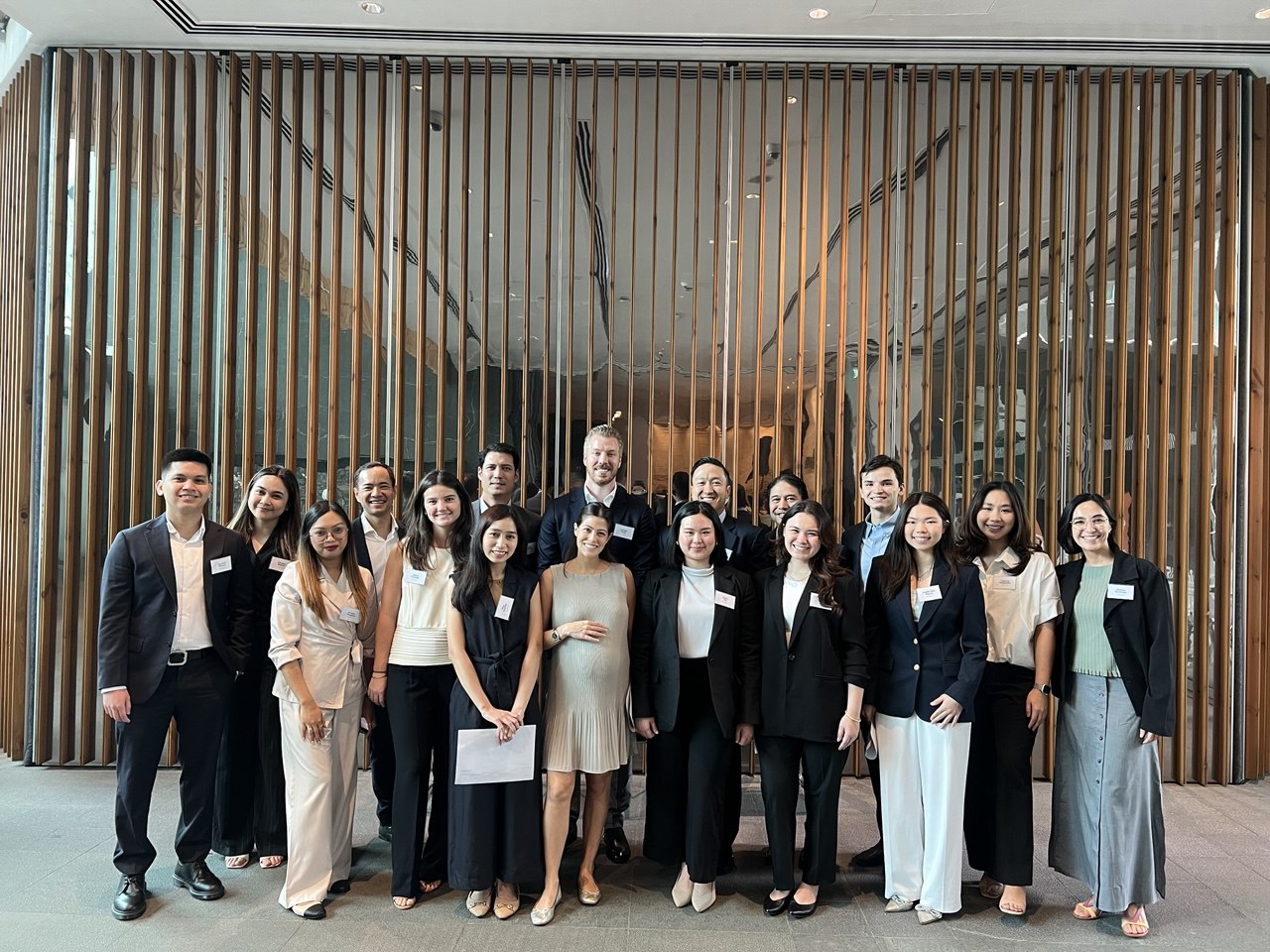
The findings were presented at a forum hosted by Foxmont, with participants from development finance institutions, consulting firms, and the Philippine technology ecosystem. Across discussions, a consistent theme emerged: the impact of rising capital flows will depend less on how much is raised, and more on how effectively it is deployed.
Anthony Oundjian, Managing Director of Boston Consulting Group, highlighted how investment patterns within organizations are evolving.
“Our clients are really investing in technology, and mostly upgrading to cater for the emerging middle class. What we don't see as much yet is investments in automation, but we're at the cusp of a change there,” Oundjian said.
At a broader ecosystem level, Andrew Jeffries, Country Director of the Asian Development Bank (ADB), noted the role of Philippines-focused venture capital firms such as Foxmont in furthering the country’s economy.
“In the next three years, if players like Foxmont are able to double in size, with more funding raised and capital flowing, that would be a strong signal.”
During the panel discussion, the importance of expanding investment and upskilling opportunities in the countryside was also emphasized. Jonathan De Luzuriaga, President of the Philippine Software Industry Association, shared:
“We graduate about 120,000 - 140,000 computer science and IT professionals each year. Based on our roadmap, we foresee that 500,000 out of the millions joining the workforce by 2028 would be from the countryside.”
Where Productivity Upside is Highest
The report points to two sectors that illustrate both the opportunity and the gap.
In semiconductors, the Philippines plays a significant role in global assembly, testing, and packaging, but captures limited value. Moving into higher-value activities such as integrated circuit design could materially increase productivity and domestic value capture.
In services, a divide is emerging. Technology-enabled firms, such as e-commerce and software platforms, are already achieving significantly higher output per worker, while many traditional sectors remain labor-intensive. The report finds that e-commerce platforms generate over USD 135,000 in output per worker annually, roughly 50 times higher than traditional retail.
The implication is clear: the Philippines does not lack demand or talent. It lacks sufficient capital per worker and the mechanisms to deploy that capital into more productive uses.
As private capital flows grow, the central question is whether they can be directed toward sectors and business models that raise productivity, strengthen enterprise capabilities, and improve value capture across the economy. That, more than funding volume alone, will determine the country’s next phase of growth.
The full report is available here: Foxmont Capital Partners Philippine Private Capital Report 2026.
About Foxmont Capital Partners
Foxmont Capital Partners is a Philippine-focused early-growth capital fund that invests in tech-enabled and scalable startups in rapidly growing sectors. We play a catalytic role in the ecosystem and act as a bridge between local founders and foreign capital. We drive value for our founders and investors by leveraging our deep operational knowledge and network, building meaningful relationships across our stakeholders.
Enabled by an amazing group of Limited Partners from both the Philippines and around the world, as well notable institutional investors, such as Grab Holdings, Pavilion Capital, the Dutch Good Growth Fund, AppWorks, Orient Growth, we look forward to continuing our investment track record, scouring the Philippine market for great entrepreneurs.
From Corporate to Startup: Why More Mid-Career Operators Are Making the Leap
Collo
Related Reading
News
Foxmont Secures $30M First Close for Fund III, Anchored by Dutch DFI, to Capitalize on Philippine Asymmetry
Foxmont closed its third fund at $30M, anchored by the Dutch Good Growth Fund and joined by Grab, more than doubling its AUM. The piece frames the raise as a bet on the Philippines’ fast-growing but undercapitalized market and on Foxmont’s plan to add more growth-stage checks on top of its local pipeline.

News
The Foxmont Summit Recap
The 2024 Foxmont Summit brought founders, LPs, and partners together around the Filipino Dream, climate and infra opportunities, scaling playbooks, and compliance. The recap distills those sessions into practical takeaways on growth, fundraising, labor, and customer journeys for Philippine startups.

News
Foxmont Summit Recap
The 2023 summit recap captures founder lessons on brand building, burn vs. growth, fundraising, HR, and when to pivot. It reinforces Foxmont’s view that tactical, local guidance is what really unlocks scale in the Philippines.